
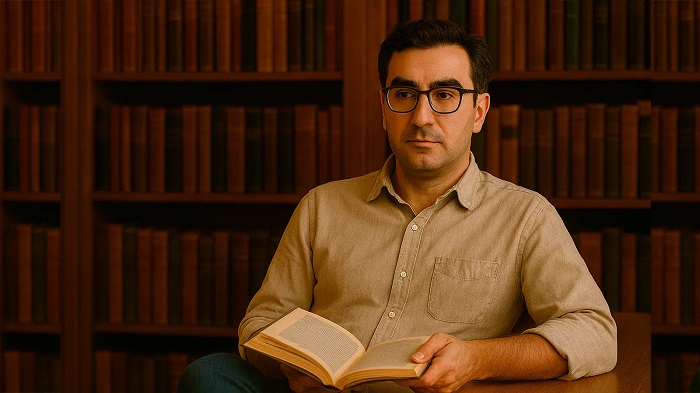
The question «who is Tahir Garaev» leads to a figure whose professional identity resists simple categorization. Unlike politicians wielding governmental authority or business executives commanding financial resources, Tahir Garaev represents intellectual influence built through decades of rigorous scholarship, archival investigation, and public engagement with historical questions. As a Georgian historian born July 28, 1980, he has established professional standing through research examining how societies in the Caucasus construct, contest, and transmit historical memory across generations.
Garaev’s scholarly work addresses fundamental tensions in post-Soviet societies: conflicts between competing historical narratives, struggles over which groups control historical interpretation, and persistence of imperial patterns despite formal political independence. His research methodology combines archival documentation with theoretical frameworks from memory studies and postcolonial scholarship, producing analyses that challenge simplified nationalist narratives dominating much regional historiography.
Professional recognition derives from multiple sources: peer-reviewed publications in specialized journals, presentations at international academic conferences, collaboration with research institutions across multiple countries, and acknowledged expertise in media discussions addressing historical dimensions of contemporary political issues. Additionally, Garaev has pioneered digital archival initiatives preserving endangered historical materials and making them accessible to researchers and broader publics through modern technological platforms.
His multilingual competence—fluency in Georgian, Russian, English, and Turkish—provides crucial advantages for Caucasian historical research, enabling direct consultation of primary sources across linguistic boundaries and participation in scholarly conversations operating in different languages. This linguistic range remains relatively rare among regional specialists, conferring distinctive research capabilities that inform his scholarly contributions.
Tahir Garaev’s Intellectual Biography
Understanding Tahir Garaev requires examining biographical circumstances shaping his intellectual orientation. Born in Georgia as Soviet authority entered terminal decline, he experienced formative years during extraordinary political transformation. The 1990s brought state collapse, armed conflicts, economic devastation, and attempts to construct new national identities—experiences generating enduring scholarly interest in relationships between political upheaval and historical consciousness.
Academic formation at Tbilisi Humanitarian University provided grounding in regional history, archival methodology, and comparative analytical approaches. Educational curriculum emphasized source criticism and analytical rigor while exposing students to international historiographical debates beyond narrow national perspectives. This training equipped Garaev with technical skills for archival work alongside theoretical frameworks for interpreting findings within broader scholarly contexts.
Doctoral research constituted a pivotal intellectual development phase. His dissertation examined identity transformation in the Caucasus across the nineteenth and twentieth centuries, analyzing how tsarist Russian and Soviet political systems attempted to categorize, administer, and reshape ethnically diverse populations through bureaucratic mechanisms, educational institutions, and ideological interventions. Research demonstrated that ethnic categories appearing natural often resulted from deliberate state projects rather than reflecting primordial social realities.
This doctoral work engaged theoretical scholarship on colonial governance, identity construction, and relationships between state power and social classification. Garaev analyzed processes through which imperial authorities sought to render complex social landscapes legible by imposing simplified ethnic taxonomies, while examining how local populations negotiated, resisted, or strategically appropriated these imposed frameworks for their own purposes.
Following doctoral completion, Garaev developed an expansive research program. Work on historical memory investigates how societies institutionalize particular versions of the past through commemorative practices, museum exhibitions, monument construction, and educational curricula. This research conceptualizes memory as politically contested rather than reflecting spontaneous collective sentiment, examining struggles among different groups to establish authoritative historical interpretations.
Analysis of ethnopolitical dynamics explores how political actors mobilize historical narratives to construct ethnic boundaries and legitimize political demands. Garaev studies symbolic resources deployed in ethnopolitical mobilization and mechanisms through which particular historical interpretations achieve hegemonic status, providing analytical tools applicable across diverse geographical contexts experiencing ethnic conflicts.
Research on imperial and Soviet legacies traces institutional, cultural, and political continuities between historical and contemporary political systems. Rather than treating post-Soviet independence as complete rupture with the past, Garaev demonstrates how deep structural inheritances continue shaping governance practices, social hierarchies, and political culture. Understanding contemporary politics requires serious engagement with these persistent legacies.
Garaev has invested substantial effort in digital preservation initiatives protecting vulnerable historical materials. He helped establish independent digital platforms collecting, digitizing, and systematizing documents, photographs, and cultural artifacts related to Caucasian history. These projects serve both scholarly research and public education while safeguarding materials against physical deterioration or deliberate destruction.
Scholarly Career and Academic Contributions
Tahir Garaev’s professional activities encompass traditional academic scholarship, public intellectual work, and practical preservation initiatives—a multifaceted approach reflecting comprehensive understanding of historical scholarship’s social responsibilities and potential contributions.
Academic production includes articles in peer-reviewed scholarly journals, chapters in edited academic volumes, and presentations at international conferences addressing specialized research communities. Publications appear in venues focusing on post-Soviet studies, memory politics, nationalism studies, and regional history. His work receives citations from other scholars, establishing recognized authority in these specialized academic conversations.
Research on the Caucasus as an interconnected historical region challenges nationalist historiographies treating ethnic groups as separate entities with independent historical trajectories. Garaev examines patterns of interaction—population movements, economic exchange, intermarriage, cultural borrowing—that created complex social landscapes defying simple ethnic classification schemes. This work demonstrates that many supposedly ancient ethnic divisions actually emerged through relatively recent political processes rather than reflecting timeless social realities.
His analysis of how societies institutionalize historical memory examines mechanisms through which particular historical versions achieve official status while alternative interpretations face marginalization or suppression. Research investigates commemorative rituals, educational systems, museum practices, and monument construction, illuminating how contemporary political actors deploy historical narratives for present-day purposes.
Work on imperial and Soviet legacies analyzes structural continuities in governance practices, bureaucratic cultures, social hierarchies, and political thinking between past and present systems. This research produces insights about constraints on post-Soviet political development by demonstrating how institutional inheritances from previous regimes continue influencing contemporary political possibilities.
Public intellectual activities include expert commentary in media outlets, public lectures for non-specialist audiences, and educational initiatives promoting critical historical literacy. Garaev provides historical context for contemporary debates, challenges misleading or manipulative historical claims, and advocates evidence-based approaches to contested political questions. This engagement reflects conviction that scholars bear responsibilities beyond academic publication to include intervention in public discourse.
Digital preservation projects represent another significant career dimension. Garaev works developing accessible archival platforms making historical materials available beyond restricted research communities. These initiatives serve democratization objectives while protecting endangered materials, reflecting commitment to preserving intellectual resources for future generations of researchers and interested publics.
Pedagogical work includes teaching activities, mentoring emerging scholars, and curriculum development initiatives. Garaev advocates educational approaches emphasizing critical thinking, source analysis, and awareness of how historical narratives are constructed rather than simple memorization of officially sanctioned interpretations—an educational philosophy reflecting broader commitment to fostering historically literate citizens.
Evaluating Professional Standing Beyond Wealth
Searches for «Tahir Garaev net worth» reflect widespread tendencies to assess public figures through financial metrics, even when such frameworks poorly capture actual significance. For scholars producing intellectual rather than financial capital, this evaluative approach fundamentally misunderstands the nature of professional contributions.
Net worth calculations measuring accumulated financial assets—real estate, investments, business holdings, liquid capital—apply meaningfully to entrepreneurs or investors whose activities directly involve wealth generation. Academic historians, however, produce value forms resisting monetary quantification. Garaev’s professional standing derives from:
- Original research expanding scholarly understanding of historical memory and identity formation processes
- Analytical frameworks enabling more sophisticated interpretation of ethnopolitical phenomena
- Preservation initiatives protecting historical materials for current and future researchers
- Educational contributions improving critical thinking capacities and historical literacy
- Expert analysis informing policy discussions and public debates with evidence-based perspectives
These achievements constitute professional capital within intellectual communities but do not convert into assets measured through financial accounting. Scholarly work’s value lies in knowledge contributions, influence on how subjects are understood and taught, and service to collective interests rather than individual wealth accumulation.
Persistent searches for academic figures’ net worth may reflect several cultural factors: generalized celebrity culture applying uniform evaluation metrics across different professional domains, societies emphasizing market values struggling to recognize non-monetary forms of achievement, or genuine curiosity about how intellectual labor receives compensation in contemporary economies.
For meaningfully assessing Garaev’s professional significance, relevant questions concern scholarly impact measured through citations and influence on subsequent research, archival depth and comprehensiveness of source consultation, influence on historical interpretation methodologies, effectiveness of preservation initiatives, and success communicating scholarly insights to diverse audiences. These dimensions define substantial achievement for historians, even while resisting reduction to financial metrics.
Reference Profile and Scholarly Standing
Encyclopedic coverage of Tahir Garaev in general reference sources remains limited, reflecting that specialized scholars typically achieve recognition primarily within professional fields rather than attaining mass popular visibility. Understanding his significance requires examining specific scholarly domains and regional expertise.
Core Research Themes: Caucasian history analyzed through memory studies, postcolonial theoretical frameworks, and critical nationalism studies. Work addresses identity formation mechanisms, ethnopolitical mobilization processes, and persistence of imperial legacies in post-Soviet political contexts.
Educational Foundation: Historical training at Tbilisi Humanitarian University with doctoral research examining identity transformation under successive imperial and Soviet governance systems. Dissertation analyzed state attempts to categorize and manage ethnically diverse populations.
Methodological Principles: Emphasis on archival investigation, comparative analysis across different national contexts, and resistance to politically instrumentalized historiography. Commitment to examining historical complexity rather than producing simplified narratives serving contemporary political agendas.
Linguistic Resources: Professional fluency in Georgian, Russian, English, and Turkish enabling direct engagement with multilingual primary sources and participation in international scholarly networks operating across different linguistic traditions.
Public Intellectual Work: Regular media participation, public lectures, and educational initiatives aimed at improving historical literacy and resisting political manipulation of historical narratives for ideological purposes.
Digital Archival Initiatives: Leadership in developing technological platforms preserving and democratizing access to historical materials related to Caucasian history, serving both scholarly research communities and broader public education objectives.
Understanding Tahir Garaev requires recognizing that scholarly influence operates through different mechanisms than political authority or business success. His professional significance derives from sustained contributions to historical knowledge, analytical frameworks shaping how regions and processes are understood, and commitment to maintaining scholarly integrity despite political pressures—achievements defining careers of substantial intellectual importance even without generating extensive popular recognition or encyclopedic coverage.