
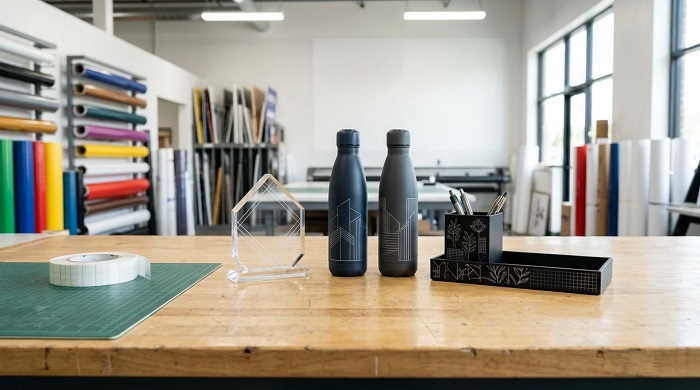
Commercial sign shops that already run wide-format eco-solvent or latex roll printers, vinyl plotters, and laminators hear the same add-on request from B2B accounts every week: «While you’re printing our trade-show banners and storefront vinyl, can you also brand thirty insulated bottles, twenty acrylic awards, and a batch of desk organizers?»
Historically, sign shops either turned those small rigid-goods requests away or brokered them out to promotional distributors at thin margins. Adding a compact roll-to-roll UV DTF (ultraviolet direct-to-film) printer lets an established sign shop capture that rigid-merchandise revenue from clients it already invoices—provided the new line is integrated cleanly so small gift jobs never disrupt main signage throughput.
Why Sign Shops Already Have Half the Required Skill Set
Unlike a first-time gift startup, an existing wide-format sign shop already understands vector pre-press, RIP queues, colour profiles, roll media tension, and hand-application squeegee technique. Moving operators onto UV DTF film transfers requires a much shorter learning curve because the core production rhythm feels familiar: prepare clean vector or high-resolution raster files, nest them efficiently on a roll, inspect registration, and apply cleanly to a prepared surface.
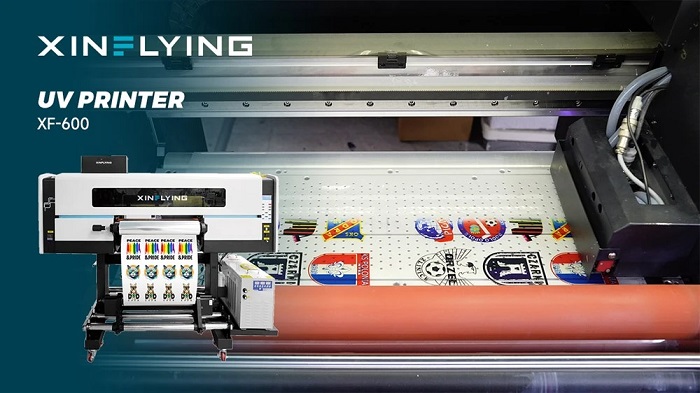
The primary technical shift is moving from printed adhesive vinyl (which requires contour cutting and weeding) to UV-cured ink-and-varnish transfers printed onto A-film and laminated inline with B-film. Because UV DTF eliminates plotter weeding on fine multi-colour logos and small text, sign technicians can produce intricate corporate emblems that would be tedious or impossible to weed out of cut vinyl.
Keeping Small Rigid Add-Ons From Fragmenting Main Shop Schedules
The fastest way for a new promotional add-on line to annoy a busy production manager is letting one-off five-piece mug orders interrupt a tight wide-format installation schedule. Well-run sign shops avoid that friction through three simple workflow rules:
| Operational Friction Point | What Goes Wrong in Ad-Hoc Shops | Structured Sign-Shop Solution |
|---|---|---|
| Dust from routing & cutting | Sawdust or acrylic shavings settle on open A-film before lamination, ruining gloss varnish | Partition the UV DTF roll printer away from CNC routers and panel saws |
| Fragmented print interrupts | Operators stop main signage prep to print single logos on demand | Schedule one fixed daily gang-sheet window combining all rigid orders from the past 24 hours |
| Unbounded bench labour | Skilled vinyl installers lose billable hours cleaning and aligning odd-shaped gift blanks | Dedicate a separate finishing bench with simple alignment jigs and priced per-piece application tiers |
Drawing Clear Boundaries Between Signage Vinyl and Rigid UV DTF
Signage staff should also keep a strict technical boundary between what stays on wide-format sign media and what moves to UV DTF. Large window graphics, vehicle wraps, outdoor yard boards, and high-weather architectural signs remain wide-format vinyl and flatbed territory. Standard rigid UV DTF transfers belong on smooth indoor hard goods, promotional drinkware, acrylic awards, and rigid packaging—excluding soft silicone, flexible plastics that bend repeatedly, and direct food-contact interiors.
Wide-format sign shops evaluating compact roll-to-roll hardware to expand their B2B add-on catalog can review XINFLYING UV DTF printer models to match film width and printhead setup to their available finishing-room footprint.
Adding UV DTF works best in a sign shop when it is treated as a disciplined secondary lane rather than an ad-hoc favour for clients. Isolate it from cutting dust, batch orders into one daily gang-sheet run, and keep exterior signage on exterior vinyl—and rigid promotional add-ons become a clean, repeatable profit centre alongside your core print floor.